What Is Contractors All Risk (CAR) Insurance?
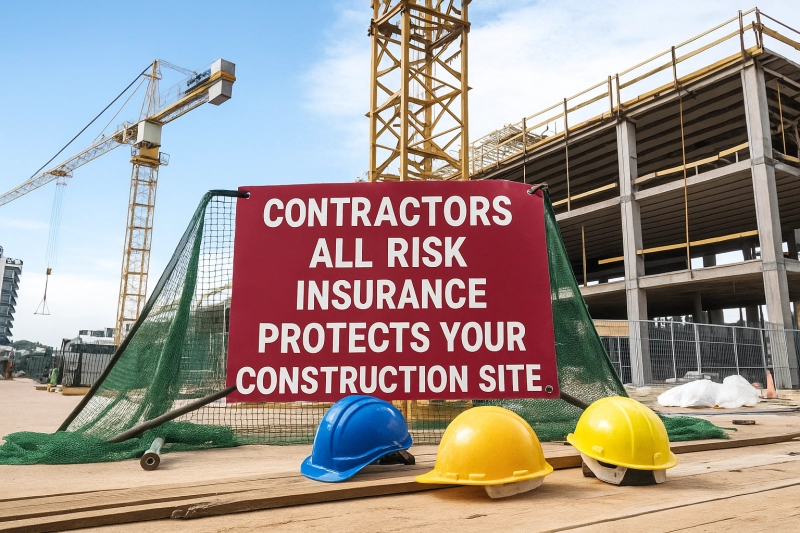
Contractors All Risk insurance is a construction insurance policy built to cover two core areas:
- Material damage (Section I): Loss or damage to contract works and, depending on the wording, temporary works and on-site materials.
- Third-party liability (Section II): Legal liability for accidental third-party bodily injury or property damage arising from the insured construction activities.
Despite the name “all risk,” CAR cover is not unlimited. It generally responds to sudden and unforeseen physical loss or damage, subject to exclusions, conditions, and deductibles.
In the UAE, CAR is widely used across villa construction, commercial projects, fit-outs with structural elements, civil engineering works, and infrastructure projects.
Why Construction Sites Face High Financial Risks
Construction combines multiple risk drivers in one place:
- High-value assets that are exposed before they are protected by permanent systems (alarms, access control, completed fire protection).
- Multiple parties working under time pressure (contractors, subcontractors, suppliers).
- Equipment movement, lifting operations, temporary power, welding and cutting.
- Exposure to weather events (heavy rain, wind, sandstorms) and site conditions (excavations, dewatering, soil variability).
The financial impact is rarely limited to the immediate repair. Delays can trigger liquidated damages under the contract, additional preliminaries, and rework costs that affect cash flow.
Key Coverage Areas Under Contractors All Risk Insurance
Material Damage Coverage
This section is the backbone of CAR. It can cover physical loss or damage to the contract works, including completed portions and work in progress, caused by insured events during the policy period.
The sum insured is commonly aligned to the full contract value, not only the value of work done to date.
Third-Party Liability Protection
Construction projects interact with the public and neighbouring properties: delivery trucks, boundary works, excavation, scaffolding, and lifting all create potential third-party exposure.
Liability cover can respond to:
- Compensation for third-party injury
- Damage to third-party property
- Legal defence costs (subject to policy terms)
This is particularly important in dense UAE neighbourhoods or mixed-use zones where pedestrian traffic and adjacent assets are high.
Coverage for Temporary Structures
Temporary works may include scaffolding, formwork, hoardings, site cabins, and temporary fencing. These items can be vulnerable to wind, impact damage, and theft.
Some policies include temporary works automatically up to a sub-limit, while others require it to be declared.
Plant, Machinery & Equipment Protection
Plant and machinery can be insured under CAR in some cases, but it is also commonly insured under separate Contractors Plant and Machinery (CPM) policies.
If you intend to cover owned or hired plant under CAR, confirm:
- Whether breakdown is covered or excluded
- Whether hired-in plant is included
- Any limits, security requirements, and deductibles
Debris Removal Costs
After a significant loss (for example, fire or structural collapse), debris removal can be a major cost item before rebuilding can even start.
Debris removal is often available with limits, so it should be sized realistically for the project type and access conditions.
What Risks Are Typically Covered?
Fire & Explosion
Fire remains one of the most severe construction losses. CAR can cover damage to works and site materials resulting from accidental fire and explosion events, subject to policy conditions (for example, hot works controls and site safety compliance).
Theft & Vandalism
Theft risk can be high on sites with stored fixtures, cables, copper, or imported finishes. Coverage often requires proof of forcible entry and reasonable site security.
Natural Disasters (Flood, Storm, Earthquake)
Weather events can be a real concern, especially during heavy rain periods. Flood and storm cover may be included or may require specific terms, and deductibles can be higher for natural perils.
Accidental Damage During Construction
CAR is designed for accidental physical damage, such as impact damage from plant movement, collapse of temporary supports, or damage during lifting and installation.
Human Error & Site Accidents
Mistakes happen: incorrect installation, accidental drilling into embedded services, or damage during finishing works. CAR can respond when the result is sudden physical damage, subject to exclusions around defective workmanship and design.
What Is Not Covered? (Common Exclusions)
Exclusions differ by insurer and wording, but common CAR exclusions include:
- Wear and tear, gradual deterioration, corrosion, and rust
- Defective design and workmanship (as a cause): Many policies exclude the cost to rectify the defective part itself, while still covering resulting damage to other parts (wordings vary)
- Mechanical or electrical breakdown (often intended for CPM or machinery breakdown cover)
- Intentional acts, fraud, and wilful negligence
- War, terrorism, and nuclear risks (often require separate solutions)
- Fines, penalties, and purely contractual liquidated damages
- Consequential financial losses (unless you purchase specific extensions such as DSU/ALOP)
- Employee injury (typically handled under workmen compensation/employers’ liability arrangements, not CAR third-party liability)
The practical takeaway: CAR is a powerful policy for physical damage and third-party liability, but it is not a substitute for proper HSE controls, quality management, and specialist covers.
Who Needs Contractors All Risk Insurance?
Contractors & Subcontractors
Main contractors often arrange CAR to protect contract works and manage liabilities arising from site operations. Subcontractors may be included, but they should confirm they are named or covered under the “insured parties” clause.
Property Developers
Developers carry delivery risk: if the build suffers a major loss, handover dates, financing schedules, and buyer commitments can be affected. CAR can be structured so the developer (principal) is included.
Civil Engineering Firms
Civil works can involve excavation, utilities, roadworks, and structural elements with heightened third-party exposure. CAR helps manage both the works and liability sides of risk.
Project Owners
Owners sometimes purchase CAR directly (owner-controlled insurance) to avoid uncertainty around contractor-arranged cover, especially on high-value villa builds or bespoke projects.
How CAR Insurance Protects Your Cash Flow
Construction cash flow depends on predictable progress. A loss event can force you to pay for:
- Immediate site stabilisation and cleanup
- Replacement materials (often with long lead times)
- Overtime and acceleration to recover time
- Professional fees for re-approval and rework
CAR insurance can reduce the size of unplanned out-of-pocket payments by responding to covered physical damage and, where applicable, third-party claims. This helps protect progress payments, reduces dispute pressure, and can make project financing more resilient.
Legal & Contractual Requirements in Construction Projects
In many UAE projects, CAR and third-party liability insurance are driven by contractual and stakeholder requirements, not just best practice.
Common drivers include:
- Contract conditions: Standard contract forms often require the contractor to insure the works and maintain liability cover.
- Client and lender expectations: Owners and banks may require evidence of valid construction insurance.
- Permit and site access requirements: Developers, master communities, and some authorities may request proof of insurance before granting access or permits.
Because requirements vary by emirate, project type, and contract wording, it is important to review the insurance clauses early and align policy terms to those obligations.
Policy Limits, Sum Insured & Deductibles Explained
CAR policies usually have separate limits for material damage and third-party liability.
- Sum insured (material damage): Often aligned to full contract value, including materials and labour.
- Liability limit: A chosen amount that reflects potential third-party exposure.
- Deductible (excess): The portion you pay per claim, which may vary by peril (for example, higher for flood).
| Policy component | What it means | Why it matters |
|---|---|---|
| Sum insured (works) | Maximum payable for damage to contract works | Underinsurance can reduce claim payments |
| Liability limit | Maximum payable for third-party claims | Dense locations often need higher limits |
| Deductible/excess | Your share of each claim | Higher excess can reduce premium but increases cash exposure |
| Maintenance period | Coverage during defects liability/maintenance (if included) | Important for handover risk and call-backs |
Ask for clarity on whether deductibles apply per occurrence, per section, and whether different deductibles apply to natural perils.
Add-Ons and Extensions to Consider
Delay in Start-Up (DSU)
DSU (often called advanced loss of profits in project contexts) can cover financial losses arising from delay in completion due to insured physical damage. It is more common on larger commercial and industrial projects.
Advanced Loss of Profit (ALOP)
ALOP is typically used where delayed completion impacts revenue, such as rental income or operational turnover. It requires careful structuring because it depends on a covered material damage claim first.
Surrounding Property Cover
If there are existing structures near the worksite (or existing owner property that could be affected), surrounding property extensions can be relevant, especially during renovations and extensions.
Off-Site Storage Cover
If you store imported materials (tiles, MEP components, glazing) in a warehouse before delivery, off-site storage cover can close a common gap in standard CAR wordings.
How to Choose the Right CAR Insurance Policy
Choosing CAR insurance is not only about premium. It is about aligning policy wording to real site risks and contract obligations.
Key checkpoints:
- Who is insured: Contractor, principal (owner), subcontractors, consultants (as applicable)
- Correct project description: Location, scope, construction type, and methods
- Realistic sum insured: Full contract value, including owner-supplied materials if relevant
- Natural peril terms: Flood and storm terms, deductibles, and conditions
- Security and safety conditions: Site fencing, watchmen, storage requirements
- Claims handling expectations: Documentation needs, reporting timelines, and surveyor process
If you want support comparing UAE options, you can also review InsuranceHub’s contractor insurance guidance at Compare contractor insurance.
Cost Factors Affecting Contractors All Risk Insurance Premiums
CAR premiums in the UAE are typically influenced by underwriting factors such as:
- Project value and scope (structure, basement, pools, specialist works)
- Construction duration and phasing
- Location and surrounding exposure (near roads, neighbours, waterfront, flood-prone zones)
- Contractor experience and claims history
- Site security arrangements
- Selected deductibles and extensions (flood terms, off-site storage, DSU/ALOP)
A useful approach is to treat premium as a function of risk controls: improving site security and safety processes can strengthen your insurance profile over time.
Real-World Claim Scenarios (Examples)
These examples illustrate how CAR claims commonly arise:
- Hot works fire: Sparks from welding ignite stored insulation, damaging completed sections of interior works. Material damage cover can respond to repair and reinstatement costs, subject to conditions.
- Flash flood event: Heavy rainfall causes water ingress into a basement excavation, damaging materials and installed components. Coverage depends on natural peril terms and deductibles.
- Theft of cables and fixtures: Overnight theft of copper wiring and stored fittings delays MEP progress. A claim may be possible if security conditions and evidence requirements are met.
- Scaffolding incident with third-party damage: Scaffolding collapses onto a neighbour’s boundary wall and vehicle. Third-party liability protection can respond to compensation and legal costs, subject to limits.
The strongest claims outcomes typically come from fast notification, clear documentation (photos, invoices, police report where required), and alignment between the loss event and the policy wording.
Get a Contractors All Risk Insurance Quote Today
If you are planning a villa build, commercial project, or civil works in the UAE, the fastest way to get the right CAR insurance is to compare options side by side and match the wording to your contract.
You can request support and quotes through InsuranceHub.ae here: How Contractors All Risk Insurance protects your construction site.