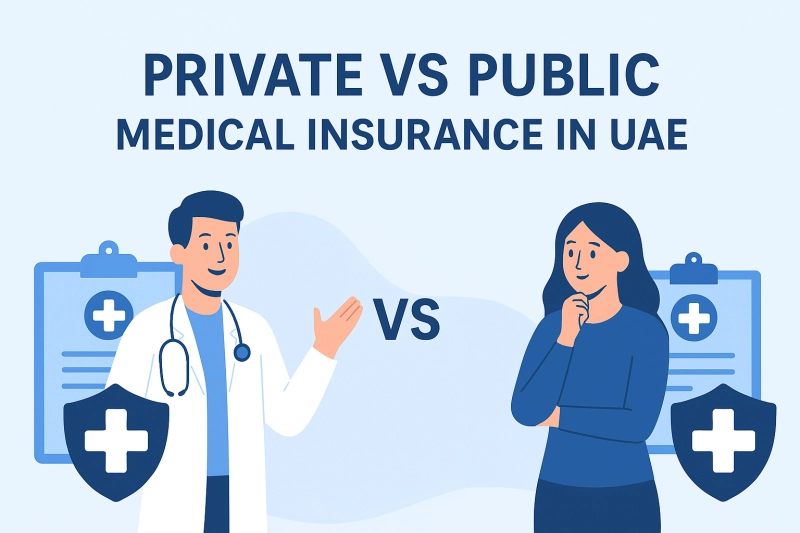
Residents in the UAE must hold valid health cover, but choosing between private medical insurance in the UAE and public health insurance can be confusing. This guide explains how both systems work so you can make an informed decision.
Public Health Insurance Overview
The UAE’s public healthcare system is funded by federal and emirate-level governments. It provides subsidized plans for citizens and select expatriates.
Key Public Programs
- Dubaicare / Thiqa / Saada – Government-backed plans for UAE nationals and eligible residents
- Essential Benefits Plan (EBP) – Basic coverage with an annual limit of AED 150,000 for employees earning below AED 4,000 per month
Advantages of Public Health Insurance
- Affordable premiums with guaranteed acceptance
- Wide network of primary-care clinics and public hospitals
Limitations of Public Health Insurance
- Restricted hospital network
- Higher co-payments (up to 30%)
- No global or international coverage
Private Medical Insurance
Private insurers such as Sukoon, Daman, and Cigna offer tiered plans that provide flexible benefits, wider hospital access, and global medical protection.
Features of Private Health Plans
- Annual coverage limits up to AED 10 million
- Optional dental, optical, maternity, and wellness benefits
- International emergency treatment and evacuation cover
Comparison: Public vs Private Health Insurance in UAE
| Feature | Public (EBP) | Private Mid-Tier | Private Premium |
|---|---|---|---|
| Annual Limit | AED 150,000 | AED 1 million | AED 5 million+ |
| Co-pay (GP Visit) | 25% up to AED 50 | 10% | 0% |
| Network Access | Restricted | Nationwide | Worldwide |
| Maternity Cover | AED 7,000 | AED 10,000–15,000 | AED 20,000+ |
| Dental Cover | Not included | Optional | Included |
| Average Annual Cost (Adult) | AED 850 | AED 3,200 | AED 7,500 |
Who Should Choose Which?
Best Suited for Public Health Insurance
- Low-income workers qualifying for the EBP
- UAE citizens covered under government programs
- Residents with limited medical needs and minimal travel
Best Suited for Private Health Insurance
- Expats preferring access to top private hospitals without referral delays
- Families planning maternity or fertility treatment
- Frequent travelers needing emergency medical care overseas
Finding the best health insurance plans in UAE requires a detailed UAE health insurance comparison that balances premiums with hospital network quality.
For expats, private medical insurance in UAE usually offers better value with flexible benefits and wider access to hospitals. Meanwhile, public health insurance in UAE serves as a safety net for essential medical needs and tighter budgets.
Tailoring your plan based on your age, lifestyle, and health history remains the most reliable way to get the best value from your expat health insurance in UAE.
Conclusion
Choosing between public and private health insurance in the UAE depends on your budget, medical expectations, and travel frequency. Use insurancehub.ae’s comparison tool to view up-to-date quotes, understand your coverage options, and find the ideal balance between cost and benefits.