
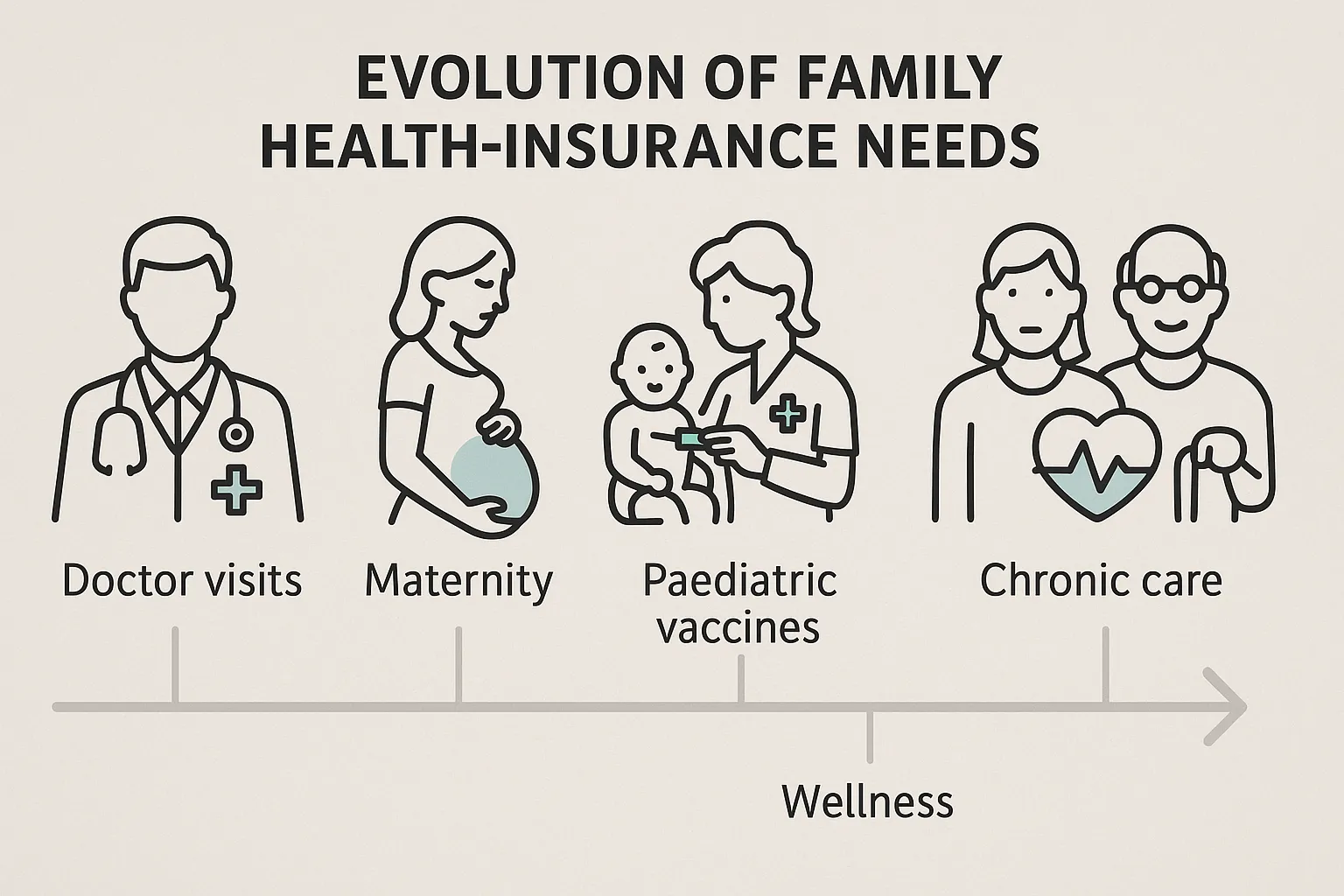
Securing reliable health cover for every family member is not just good practice in the UAE—it is the law. Since the nationwide mandate that took effect on 1 January 2025, all residents must hold at least a basic medical policy approved by the Central Bank of the UAE. Yet a “one-size-fits-all” plan rarely exists. Parents juggle maternity benefits and paediatric check-ups, adolescents need sports-injury cover, and older relatives may require chronic-disease management. Choosing the wrong policy can leave critical gaps and painful out-of-pocket bills.
This guide breaks the process into clear, data-driven steps so you can shield your family’s health—and your finances—with total confidence.

1. Know the Regulatory Ground Rules
- Dubai Health Insurance Law No. 11 (2013) and Abu Dhabi Law No. 23 (2005) already made employer-funded cover mandatory inside those emirates.
- Federal Decree-Law No. 48 of 2023 extended basic health insurance to all seven emirates from 2025, with penalties of up to AED 500 per uninsured month and visa delays for non-compliance.
- Minimum benefits under the nationwide Basic Package include:
- Inpatient and outpatient treatment up to AED 150,000 per person per policy year
- Emergency care across the UAE
- Maternity (up to AED 10,000 normal / AED 12,000 C-section) with 10 % co-pay
- Prescribed drugs subject to 30 % co-insurance capped at AED 1,500 per year¹
Families can, of course, upgrade to enhanced or international plans to raise those limits, expand networks, or add extras such as dental and worldwide evacuation.
2. Map Your Family’s Health Profile
Accurately projecting medical needs for the next 12–24 months is half the battle.
- Life stage: Are you expecting a baby? Planning orthodontics for teens? Do elderly parents live with you?
- Pre-existing conditions: Diabetes and hypertension affect roughly 30 % of UAE adults (DHA 2024 survey). Disclose them upfront to avoid claim denials.
- Lifestyle factors: Frequent travel, adventure sports, or a family history of hereditary diseases may dictate higher coverage or global plans.
- Budget tolerance: Decide the maximum annual premium you can realistically sustain; lapsing cover mid-year can trigger fines and new waiting periods.
Document these points before you compare quotes. InsuranceHub’s online questionnaire uses similar prompts to surface the most relevant options in under two minutes.
3. Decode the Main Plan Categories
| Plan Tier | Typical Annual Limit | Network Scope | Ideal For | Indicative Family Premium* |
| Essential Benefits Plan (EBP) | AED 150 k | UAE-only, entry-level clinics & hospitals | Low-income workers & dependants | AED 2,600 – 3,000 |
| Enhanced / Gold | AED 500 k – 1 m | Wider UAE network, some GCC access | Families needing maternity, chronic care | AED 6,500 – 9,000 |
| Premium / Platinum | AED 1 m – 5 m | Worldwide, direct-billing at private hospitals | Frequent travellers, high earners | AED 14,000 – 20,000 |
| International Major Medical | Unlimited / USD limits | Global incl. USA | Expats on global assignments | USD 10,000 – 18,000 |
*Family of two adults (35 & 33 yrs) + two children, non-smokers, no major pre-existing illnesses; quotes aggregated by InsuranceHub.ae May 2025.
4. Compare the Factors That Matter Most
Coverage Limits vs. Realistic Costs
Private ICU rates average AED 9,500 per night in Dubai (Colliers Healthcare Market Review 2024). A severe accident could exhaust low limits fast. Aim for at least AED 500,000 if you have young children or aging parents.
Hospital & Clinic Network
Direct-billing saves you from large upfront payments. Cross-check whether your preferred paediatrician or maternity hospital appears on the insurer’s tier, not just the overall list.
Top 5 Hospitals in Abu Dhabi to Know in an Emergency
Maternity & New-Born Benefits
Many plans impose a 6–12 month waiting period for maternity. If you are planning a pregnancy soon, choose a plan with immediate eligibility or pay higher rider premiums later.
Pre-Existing & Chronic Disease Coverage
The new federal rules abolished the four-year waiting period, but insurers may still apply loading or sub-limits for high-risk conditions. Review the wording carefully.
Cost-Sharing Terms
- Deductible: Fixed amount you pay per claim (e.g., AED 50 GP visit)
- Co-insurance: Percentage of each bill you pay (e.g., 20 % outpatient)
Balancing a moderate deductible with a higher annual limit often yields the best value
Claim Settlement Ratio (CSR)
A high CSR indicates smoother reimbursement. Anything above 90 % within 30 days is considered robust in the UAE. Learn more in our post on Why CSR Is the Ultimate Test.
Digital Services & Telemedicine
Post-pandemic, insurers offering app-based pre-authorisations and 24/7 video consultations see 25 % higher customer satisfaction (PwC Middle East 2024). Evaluate each provider’s tech stack if convenience matters to your family.
5. Budget Smarter Without Sacrificing Protection
- Stack coverage strategically: Pair an EBP for domestic helpers with an Enhanced family plan; don’t over-insure every dependent equally.
- Use higher deductibles for low-frequency members: A healthy partner who rarely visits hospitals can opt for a AED 3,000 annual deductible to slash the premium by up to 18 %.
- Annual payment discounts: Many insurers grant 5–7 % off when you pay yearly instead of monthly.
- Top-up policies: If your employer offers limited cover, a personal top-up plan can raise limits at a fraction of buying a full policy.
- Wellness rewards: Some insurers now credit up to AED 1,000 of gym memberships or nutrition programs toward next year’s premium—worth factoring into the value equation.
6. Avoid the Pitfalls First-Time Buyers Make
- Buying solely on price and ignoring sub-limits for major surgeries
- Combining elderly parents and small children under a single low limit (one major claim can exhaust the pool)
- Skipping the Summary of Benefits document—where real restrictions hide
- Missing disclosure of existing conditions; insurers can retroactively void claims within two years
- Forgetting to verify visa-compliant coverage before renewal, risking fines and visa delays
Read our cautionary list of 3 Common Mistakes to Avoid for deeper insights.
7. A 5-Step Method to Buy the Right Plan on InsuranceHub.ae
- Enter Your Profile: Age, visa status, dependants, existing conditions.
- Instant Quote Engine: Compare side-by-side premiums, limits, networks from 50+ Central Bank–approved insurers.
- Filter & Sort: Prioritise maternity, global cover, or zero deductibles using intuitive sliders.
- Free Expert Call: Schedule a 10-minute consult with a licensed advisor who explains fine print and negotiates any special riders.
- Secure Checkout: Upload documents, pay securely online, and receive your digital policy card within hours—often the same day.
Clients typically save up to 40 % versus walking into a single insurer, thanks to bulk-negotiated rates and transparent fee structures.
8. Future-Proof Your Family’s Coverage
Life moves fast—so should your insurance strategy.
- Annual Review: Re-quote every 12 months; market premiums fluctuate 10–15 % year-to-year.
- Upgrade Windows: Most insurers allow mid-term upgrades upon marriage or childbirth without fresh waiting periods—notify them within 30 days.
- Portability Provisions: Moving from Dubai to Abu Dhabi? Choose insurers with cross-emirate portability to avoid new underwriting.
- Digital Record Keeping: Store e-cards and benefit tables in a secure cloud folder; claims are quicker when paperwork is ready.
The Bottom Line
Health insurance is more than a legal checkbox in the UAE—it is the backbone of your family’s well-being. By understanding regulations, mapping medical needs, and comparing plans with the right metrics, you can invest in coverage that truly shields every generation under your roof.
Ready to turn knowledge into action? Visit InsuranceHub.ae today, run a free quote, and secure a plan that grows with your family—before the next doctor visit catches you unprepared.